
Scale
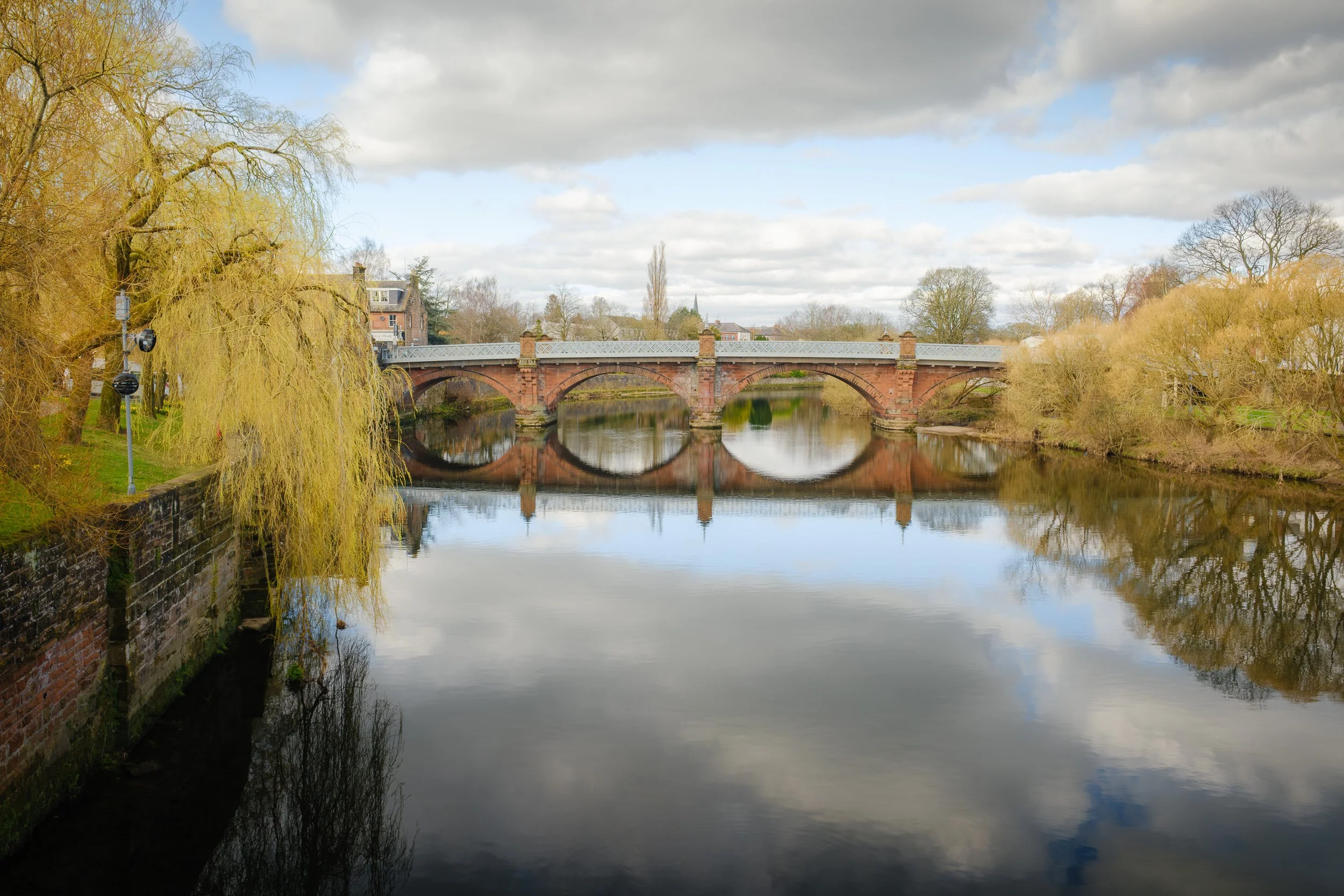
Buccleuch Street Bridge, Dumfries
The Ides of March
Genre (a word I irrationally detest by the way)
The definitions of different photography genres are, let’s face it, pretty meaningless. If I take a photograph of a beautiful location while on a short break away from home, is that landscape or travel photography? It’s obviously not portraiture, but even then, a person as a subject in a landscape frame can add context and a sense of scale - not the scale I’m talking about here.
I prefer calling what I do ‘photography’, plain and simple, but as a creative endeavour, it’s far from simple. Really. Incredible phone technology has made taking great pictures and videos so wonderfully accessible and achievable. Long exposures, low-light images, raw file formats, and especially videos, are all a click away on a device we can fit in a pocket. And they can make phone calls if you really want. Well… most of the time.
Marginal gains
Ignoring the myriad of factors that make a great photograph, physical scale is the main problem with phones. Tiny sensors and teeny, tiny lenses don’t make for great printed artwork. Sure, you can bump up resolution with AI tools and lean on the computational wizardry inside. The excellent Photomator app, for example, has a brilliant one-click ‘super resolution’ feature.
I like my phone (we’re an Apple house). I just don’t think that the majority of images I capture with it are good enough for my portfolio, nor, unless specifically constrained to certain dimensions, to sell as prints.
Ultimately though, and assuming for a moment that you care about my photography at all, it’s unlikely that you care about the tools I use. A great image is just that, providing it can be scaled to the correct dimensions for the chosen presentation medium without loss of fidelity. From an iPhone costing a few hundred quid to a Hasselblad monster costing as much as a new car, the relatively marginal, but critical gains in scale and quality are ridiculously expensive to acquire.
Little boxes
The camera industry has a lot to answer for here. Technically, cameras are still just boxes with a sensor that captures light through a series of shaped bits of glass. Innovations now creep along, with faster autofocus, mind blowing frames-per-second counts, superb image stabilisation, 8k video, etc, etc. All the while, prices edge ever upwards. For someone starting out as a serious photographer, the investment can be eye-watering.
So how about that cheaper good-enough alternative I talked about in a previous blog post? How about making a camera that suits me, and doesn’t have capabilities that I don’t need or want? Video for example? This is why the likes of MPB exist - to give people access to a more affordable market of second hand gear. I’ve got, and cherish, my chosen tools - my Fujifilm X100V and X-T5, along with some lovely lenses, but I do feel myself occasionally drawn to some old kit. Well-loved but obsolete in all current measures of excellence. How worryingly familiar …
