
Knapdale
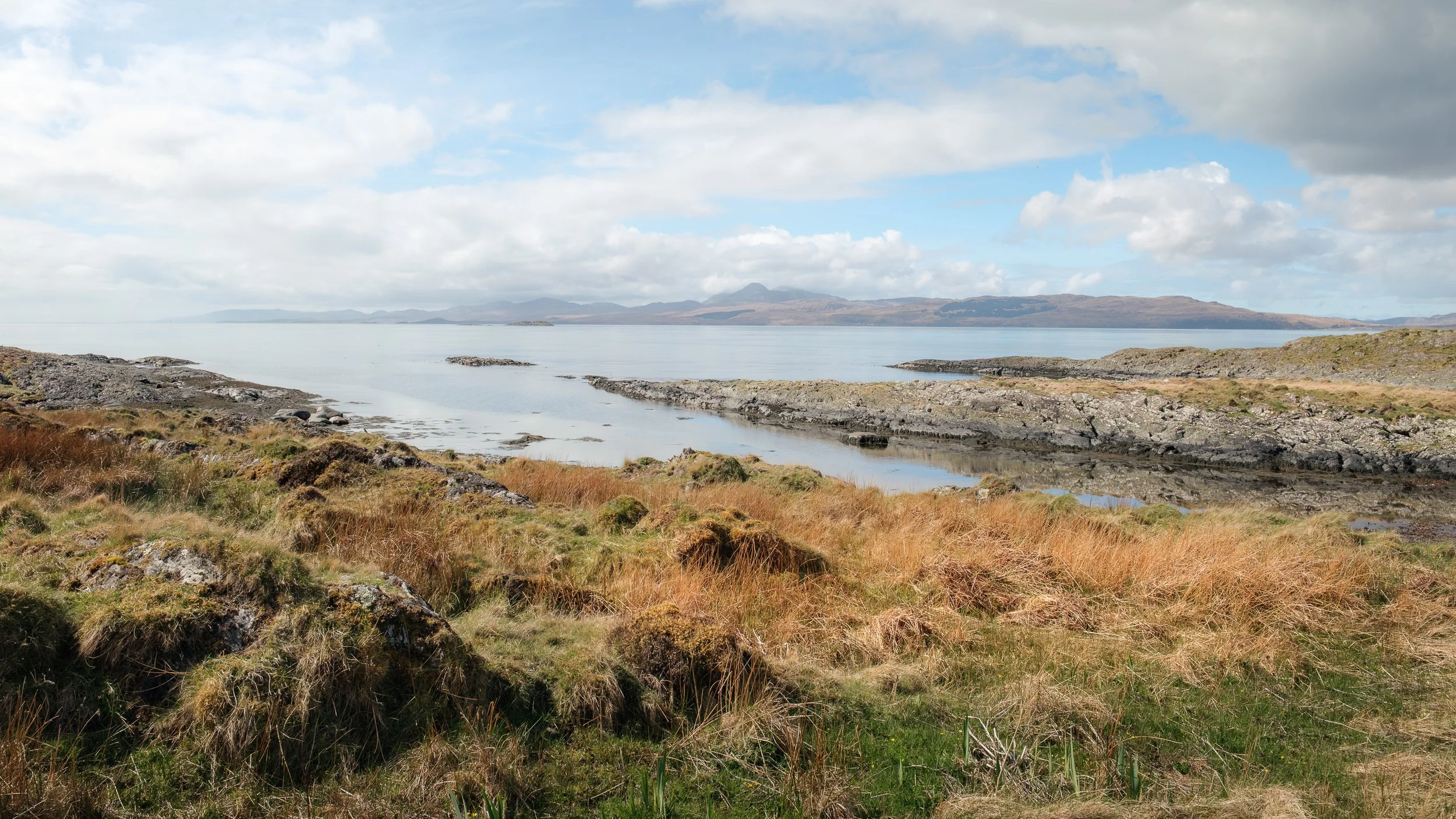
Jura from Keill Point, Knapdale
Developing
There’s a wonderful sense of anticipation on returning from a day out taking photos. Somewhat counterintuitively, digital photography is not an instantaneous art. Cameras can render instant images from a menu of preset image styles. In Fujifilm terminology, these presets are rather loftily called Film Simulations in deference to their well-loved 35mm physical film stocks, Provia, Astia, Velvia… you get the idea. These straight out of camera JPEG files can be great representations of what the photographer wanted to capture, assuming favourable conditions, consistent lighting, accurate composition, etc, but these variables can’t always be relied upon. Then there’s the creative element; what the photographer actually wanted to convey.
Most creative photographers therefore choose to develop their images from the RAW files that digital cameras can capture if configured to do so. A RAW file is simply data (not an image) containing all of the information captured by the camera’s sensor, ready to be loaded into image-processing software and to be ‘developed’ in a similar way to how films were developed in darkened rooms with trays of chemicals. Having both a technical and an artistic/design background, I love this process. Tinkering with the knobs and dials and masks and sliders, until the image I saw through the viewfinder and in my mind, appears on my computer screen. It takes time, sometimes days or weeks after the shoot to finally get a few finished images, ready to share and print.
The anticipation following a recent visit to Knapdale in Argyll got the better of me, and a showery day after the trip gave me just the excuse I needed for some creative time. A few of the resulting images are already on this website.
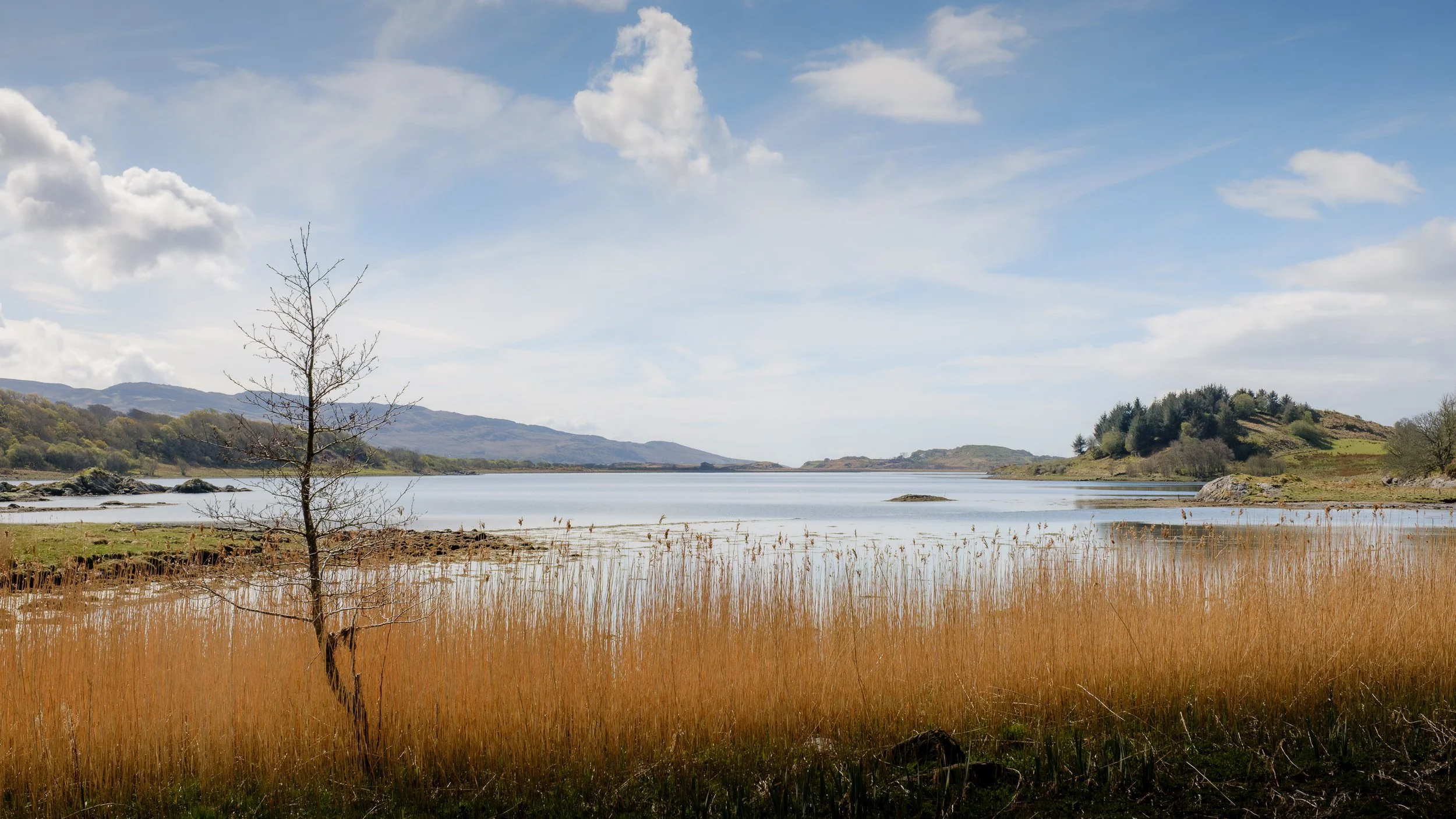
Loch na Ceille
Knapdale
A peninsula? An isthmus? A district? Whatever it is, this bit of Argyll, like all the other bits, has its distinct character. I normally only visit when the weather’s kind, so I tend to associate it with fresh air, sunshine and open spaces, compared with the moist, darkly forested, and mountainous Cowal Peninsula that I call home. Bordered to the north by the Crinan Canal and Cowal, and to the south by the pretty fishing town of Tarbert on the banks of Loch Fyne - an impossibly skinny waist of land before the long leg of the Kintyre Peninsula begins. It’s an ancient, fascinating area, peppered with castles, lochs, and long, fractured fingers of land reaching out across the Sound of Jura as though attempting to grab the islands and bring them back ashore.
The beautiful, sheltered marina and village of Tayvallich is such a perfect place for lunch and to hear the chatter of sailors and holidaymakers. Much of the land here is productive forestry where freshwater lochs house busy Beavers and attract Ospreys in the summer months. Travel along the eastern shores of Loch Sween to Kilmory for further drama and historic castles and chapels that would be crawling with snapping tourists if it wasn’t so remote. But I’m not much of a human history fan; I’m here for nature and the spectacular views from the remote Keill Point. It never disappoints…
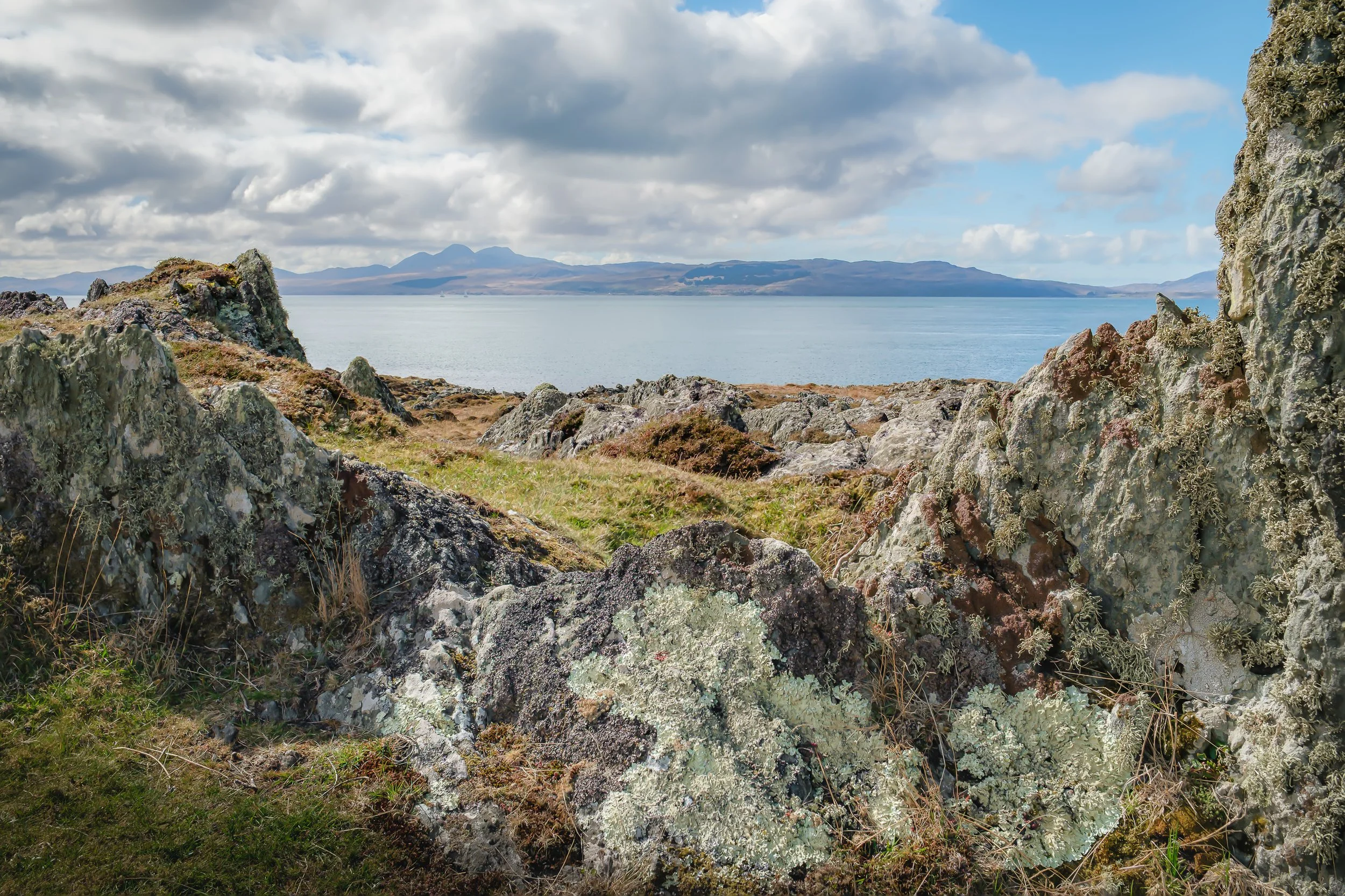
The lichens and mosses of Keill Point with Jura over the Sound
Ferry
Following a perfectly pleasant day’s shooting and a picnic on a deserted shore, we opted to return to Cowal and home via the ferry from Tarbert Harbour to Portavadie Marina for a late meal, before gambling on a slow, dark drive home, knowing we would encounter plenty of deer wandering carelessly into our path. Few locals have escaped the truly horrible union of car and venison. We made it home safely this time. Well worth the risk.
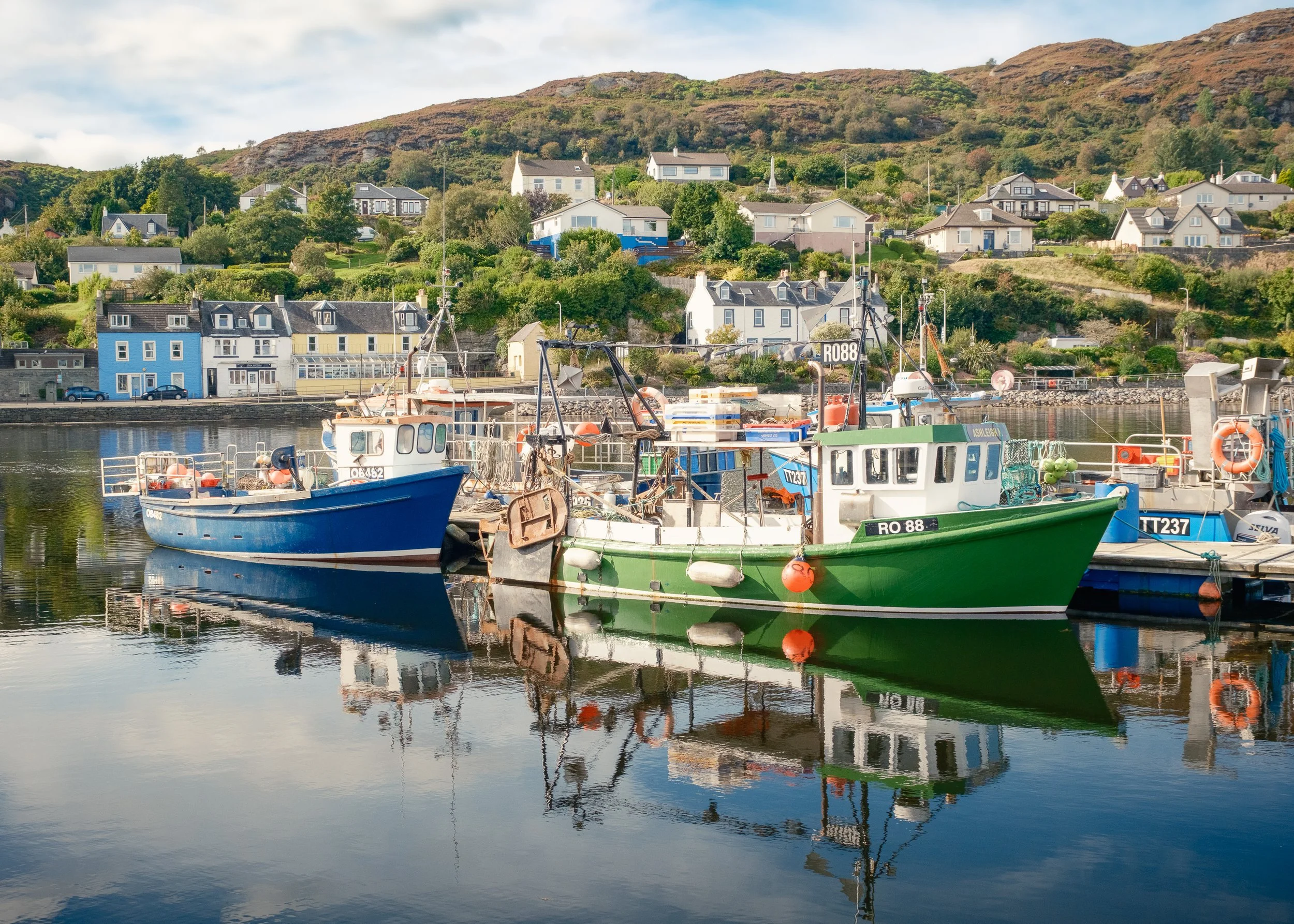
Tarbert Harbour
